How much does pressure washing cost in Roanoke, VA?
If you’ve searched online for pressure washing prices, you’ve probably noticed something frustrating: the numbers are all over the place.
One website may tell you pressure washing costs 10 cents per square foot. Another may show 30, 40, or 50 cents per square foot. One contractor might quote a few hundred dollars while another gives you a significantly higher estimate for what seems like the same job.
So, how much does pressure washing actually cost in Roanoke, Virginia?
The answer depends on much more than the advertised square footage of your home.
The amount of exterior surface being cleaned, number of stories, terrain, accessibility, material, amount of organic growth, time since the last cleaning, chemicals required, landscaping, water availability, specialty stains, travel, equipment, insurance, and expected results can all affect the final price.
That may sound like a lot, but by the end of this guide you’ll understand what you’re actually paying for, why two contractors can give different estimates, what questions you should ask, what the company you’re hiring should ask you, and how homeowners can potentially reduce their exterior cleaning costs over time.
What Does Pressure Washing Cost Nationally in 2026?
National pricing guides show just how much pressure washing prices can vary.
According to Angi’s 2026 pricing data, professional pressure washing typically ranges from approximately $0.10 to $0.50 per square foot, depending on the property, surface, location, and scope of work.
For whole-house projects, Angi lists broad price ranges based on the number of stories:
One-story home: $150–$750
Two-story home: $400–$1,400
Three-story home: $700–$1,800
That’s a huge range—and that’s the point.
A national price-per-square-foot figure can be useful as a general reference, but it doesn’t tell you what your particular property will cost to clean.
A straightforward one-story home with easy access is a very different project from a multi-story home with steep terrain, heavy organic growth, difficult access, or specialty cleaning needs.
National averages also combine different markets, companies, properties, and scopes of work. That’s why two legitimate estimates can fall in very different places within the same national range.
National pricing gives us a starting point. The actual property determines the estimate.
How Much Does Pressure Washing Cost in Roanoke, Virginia?
Roanoke pricing varies too.
Published local pricing guides estimate roughly $400–$700 for pressure washing a 1,500–2,000-square-foot home in Roanoke, while another local cost source places general pressure-cleaning projects around $442–$597. These numbers can provide a useful reference, but they should not be treated as a guaranteed price for a house wash.
There is no single citywide rate that every Roanoke pressure washing company follows.
Different companies may price by square footage, by service, by estimated labor and materials, or by a combination of factors.
A straightforward one-story house wash is different from cleaning a two-story home on a steep Roanoke hillside.
Cleaning concrete is different from cleaning vinyl siding.
Cleaning a roof is different from washing a house.
Removing ordinary organic growth is different from treating rust, red clay, oxidation, oil, or another specialty stain.
That’s why asking only:
“What’s your price per square foot?”
doesn’t always tell you what the final price will be.
A better question is:
“What does it take to safely clean my particular property and achieve the result I’m expecting?”
And even something as simple as the advertised square footage of a home can be surprisingly misleading.
Why a 2,000-Square-Foot Home Doesn't Mean 2,000 Square Feet of Cleaning
For our mathematically inclined homeowners, here’s where things get interesting. Everyone else can skip ahead—we’re about to nerd out a little. We promise your pressure washing estimate won’t come with a geometry exam.
Let’s use a hypothetical example that’s not particularly unusual around Roanoke.
Imagine a 2,000-square-foot, two-story home with an attached two-car garage, built on a hill with a walk-out basement.
From the street, it looks like a normal two-story house.
Walk around the back, though, and because the property slopes downhill, the exposed basement makes the rear of the home effectively three stories tall.
Now let’s look at what “2,000 square feet” actually means.
The advertised square footage of a home generally refers to finished living area. An attached garage is generally not part of that finished living area. Under Fannie Mae’s appraisal rules, a level is considered below grade if any portion of it is below grade, and even a finished walk-out basement is reported separately from the above-grade square footage.
But an exterior cleaning contractor doesn’t get to ignore those surfaces.
If the garage has siding, it still needs cleaning.
If the basement wall is exposed on the back of the house, it still needs cleaning.
So let’s do some math.
Start With the Main House
Suppose our 2,000-square-foot house consists of two approximately 1,000-square-foot floors with a simple 25-foot by 40-foot footprint.
The perimeter is:
25 + 40 + 25 + 40 = 130 linear feet
Assume approximately 9 feet of exterior wall height per floor.
Two stories gives us approximately 18 feet of exterior wall height.
130 × 18 = 2,340 square feet
We’re already at roughly 2,340 square feet of gross exterior wall surface on a house described as 2,000 square feet.
And we’re just getting started.
Now Add the Attached Garage
Let’s give the home a typical two-car garage measuring approximately 20 feet by 22 feet, or 440 square feet.
Since one side is attached to the house, we’re primarily dealing with the remaining exposed walls.
Using approximately 64 linear feet of exposed garage wall at 9 feet high:
64 × 9 = 576 square feet
But we don’t want to count the section of the house wall that the garage now covers.
If approximately 20 feet of house wall is shared with the garage:
20 × 9 = 180 square feet
So the garage adds approximately:
576 − 180 = 396 net square feet
Our running total becomes approximately:
2,736 sq ft
Remember, the garage itself generally wasn’t included in the original 2,000-square-foot living-space number.
Now Put the House on a Roanoke Hill
Here’s where our local terrain really changes the picture.
Suppose the basement is underground at the front of the home, but the ground slopes downward until the full 9-foot basement wall is exposed at the rear.
If the back is 40 feet wide:
40 × 9 = 360 square feet
But the sides are exposed too.
As the terrain drops from essentially zero basement exposure at the front to approximately 9 feet at the rear, each exposed side can be roughly represented as a triangle.
For each 25-foot side:
½ × 25 × 9 = 112.5 square feet
Both sides together:
225 square feet
So our hillside basement adds approximately:
360 + 225 = 585 square feet
Our 2,000-square-foot home has now reached roughly:
3,321 square feet of gross exterior wall surface
Still with us?
Good, because we haven’t reached the roofline.
Don’t Forget the Gables
Normal roof gables add additional siding above the rectangular wall areas we’ve already calculated.
Suppose the home has two 25-foot-wide gables with approximately a 6-foot rise.
Each triangular gable gives us:
½ × 25 × 6 = 75 square feet
Two gables add:
150 square feet
Now we’re at approximately:
3,471 square feet of gross exterior wall surface
for a house advertised as 2,000 square feet.
And this is still a simplified house.
Now add dormers, garage gables, bump-outs, bay windows, additions, chimneys, porches, multiple rooflines, taller peaks, additional exposed foundation, architectural offsets, and other irregular surfaces.
Depending on its design, a more complicated 2,000-square-foot home could easily present 3,500 to 4,000-plus square feet of gross exterior surface.
Suddenly, “It’s only a 2,000-square-foot house” means something very different.
But Surface Area Is Only Half the Story
Cleaning 3,500 square feet of flat wall at ground level isn’t the same as cleaning 3,500 square feet spread across a tall home built into a hillside.
The rear of our hypothetical property is effectively three stories high.
Now the contractor may be navigating a steep slope, pulling hoses uphill and around corners, reaching tall peaks, protecting landscaping underneath the work area, working around decks or retaining walls, and dealing with obstacles that make equipment movement more difficult.
So even if two properties somehow had identical exterior surface area, their difficulty can still be completely different.
And there’s one more problem.
We Haven’t Even Talked About How Dirty It Is Yet
What if this hypothetical house hasn’t been professionally cleaned in 20 years?
Now we’re not simply dealing with 3,500-plus square feet of exterior surface.
We’re dealing with years of accumulated algae, mildew, dirt, and organic growth.
A normal application may not achieve the desired result.
Heavily contaminated areas can require a second application, additional dwell time, spot treatment, and additional rinsing.
That means more chemical.
More water.
More equipment runtime.
More labor.
More time on the property.
So our “2,000-square-foot house” could actually involve 3,500 to 4,000-plus square feet of exterior surface, three-story rear access, steep terrain, landscaping and obstacles—and portions of the property might need to be treated twice.
That’s exactly why two homes with the same advertised living square footage can receive very different estimates.
Wondering What Your Property Would Cost to Clean?
Every property is different. Get a free estimate based on your actual property, the surface being cleaned, and the services you need.
100% Satisfaction Guarantee – One-Year Algae-Free Guarantee Available – No-Obligation Estimates
What Actually Determines the Price of Pressure Washing?
Now that we’ve thoroughly abused geometry, let’s look at the other factors a professional exterior cleaning company may consider.
1. The Actual Size of the Project
Square footage still matters.
A larger surface generally requires more cleaning solution, water, hose setup, rinsing, equipment runtime, and labor.
But as we just demonstrated, living square footage is not exterior cleaning square footage.
A contractor may consider the footprint, perimeter, wall height, stories, garage, roofline, exposed basement, additions, gables, and other surfaces involved in the scope of work.
This is why an online real estate listing is useful for estimating—but it doesn’t replace understanding the actual property.
2. Level/type of buildup
The condition of the property can have a major impact on price.
A home with light dirt and minor organic growth may require a relatively straightforward cleaning. A property with years of accumulated algae, mold, mildew, grime, or other buildup may require more time, cleaning solution, dwell time, and additional treatment to achieve the desired result.
How long it’s been since the property was last cleaned can contribute to that condition, but time alone doesn’t determine the price. A shaded home surrounded by trees may develop heavy organic growth much faster than a home with good sunlight and airflow.
The type of buildup matters too. Routine dirt and organic growth are very different from oxidation, rust, red clay, oil, efflorescence, or other specialty stains that may require different chemicals, processes, or additional labor.
The heavier or more complicated the buildup, the more time and resources the project may require.
3. One Story vs. Two or Three Stories
Height matters.
A one-story home on flat ground can usually be accessed more easily than a two- or three-story structure.
Higher surfaces may require different equipment, longer application distances, specialized techniques, more hose, additional safety planning, or more time.
National Angi pricing data also reflects this difference, with higher-story homes generally costing more to clean than one-story properties.
In Roanoke, terrain can make the story count deceptive.
A house that appears to be two stories from the driveway might be three stories tall from the backyard because of an exposed walk-out basement.
4. Accessibility
Accessibility is one of the easiest pricing factors to overlook.
Imagine two identical exterior walls.
One has open, level ground directly in front of it.
The other sits behind a fence, down a hill, behind a deck, surrounded by shrubs, and requires hundreds of feet of hose to reach.
Same wall.
Different job.
A contractor may have to account for steep terrain, fences, narrow gates, long driveways, restricted parking, retaining walls, backyard-only access, decks, pools, and other obstacles.
All of those affect efficiency.
5. Landscaping and Property Protection
A professional cleaning process isn’t simply spraying solution on a house.
Depending on the project, contractors may need to protect flowers, shrubs, trees, grass, decorative items, electrical components, cameras, outdoor furniture, pools, painted surfaces, or other sensitive areas.
Plant protection may involve wetting vegetation before treatment, managing chemical application, monitoring runoff, and rinsing plants during and after cleaning.
That labor is part of the service even though the homeowner may never see most of it happen.
6. Is a Reliable Water Source Available?
Most residential exterior cleaning is more efficient when a reliable water source is available on the property.
When it isn’t, or if it’s on a well, the contractor may need additional planning or equipment.
Depending on the circumstances, that could mean bringing water, using storage tanks, coordinating another source, or running significantly more hose.
Water availability can therefore affect logistics and sometimes pricing.
7. Distance and Travel
The job doesn’t begin when the first drop of cleaning solution hits your house.
The contractor has already loaded equipment, driven to the property, burned fuel, transported a trailer or commercial equipment, and invested time reaching the job.
A larger project may easily absorb those costs.
A very small project located far away may not.
This is one reason many service companies establish minimum service charges.
8. Preparation Before the Cleaning Begins
Patio furniture, grills, planters, decorations, toys, vehicles, and other belongings can sometimes need to be moved before cleaning can begin.
We ask customers to move smaller personal items whenever possible, but we also understand that isn’t always practical. When reasonable, we’re happy to help move certain items—especially for customers who may have difficulty doing it themselves.
For larger projects, however, extensive preparation can add time to the job and may affect the price.
Why Do Pressure Washing Companies Have Minimum Service Charges?
Imagine asking a contractor to clean one small section of sidewalk.
The actual cleaning might take 20 minutes.
But the company still has to schedule the appointment, prepare equipment, drive to the property, set up hoses, inspect the area, complete the work, clean up, pack the equipment, drive away, maintain the equipment, process billing, and handle customer communication.
Those costs exist whether the contractor cleans 100 square feet or 3,000 square feet.
A minimum charge allows the business to cover the cost of mobilizing to the property.
And that’s where homeowners can potentially get more value by bundling work together.
Can Bundling and Routine Exterior Cleaning Save Money?
Yes. In many cases, both can.
Every service visit has costs that exist before the actual cleaning begins—travel time, setup, equipment, chemicals, property protection, breakdown, and administrative expenses.
That’s one reason adding a driveway, sidewalk, patio, or another service while a company is already at your property may cost less than scheduling each service separately.
Routine maintenance can also help control costs over time.
A property with several years of heavy organic growth, embedded dirt, or staining may require more time, stronger treatment, or specialty cleaning than a property that has been maintained regularly.
That doesn’t mean every home needs to be pressure washed every few months. The goal is simply to address buildup before a routine cleaning turns into a more involved restoration project.
Bundling services can reduce the cost per service. Routine maintenance can reduce how difficult those services become.
What Is the Difference Between Routine Cleaning and Specialty Stain Removal?
Another pricing mistake is assuming that every discoloration on a property is simply “dirt.”
It isn’t.
Green algae on vinyl siding may respond to one process.
Rust on concrete may require another.
Red clay can require specialty chemistry.
Oxidation on siding is a different problem from organic growth.
Oil and grease behave differently from mildew.
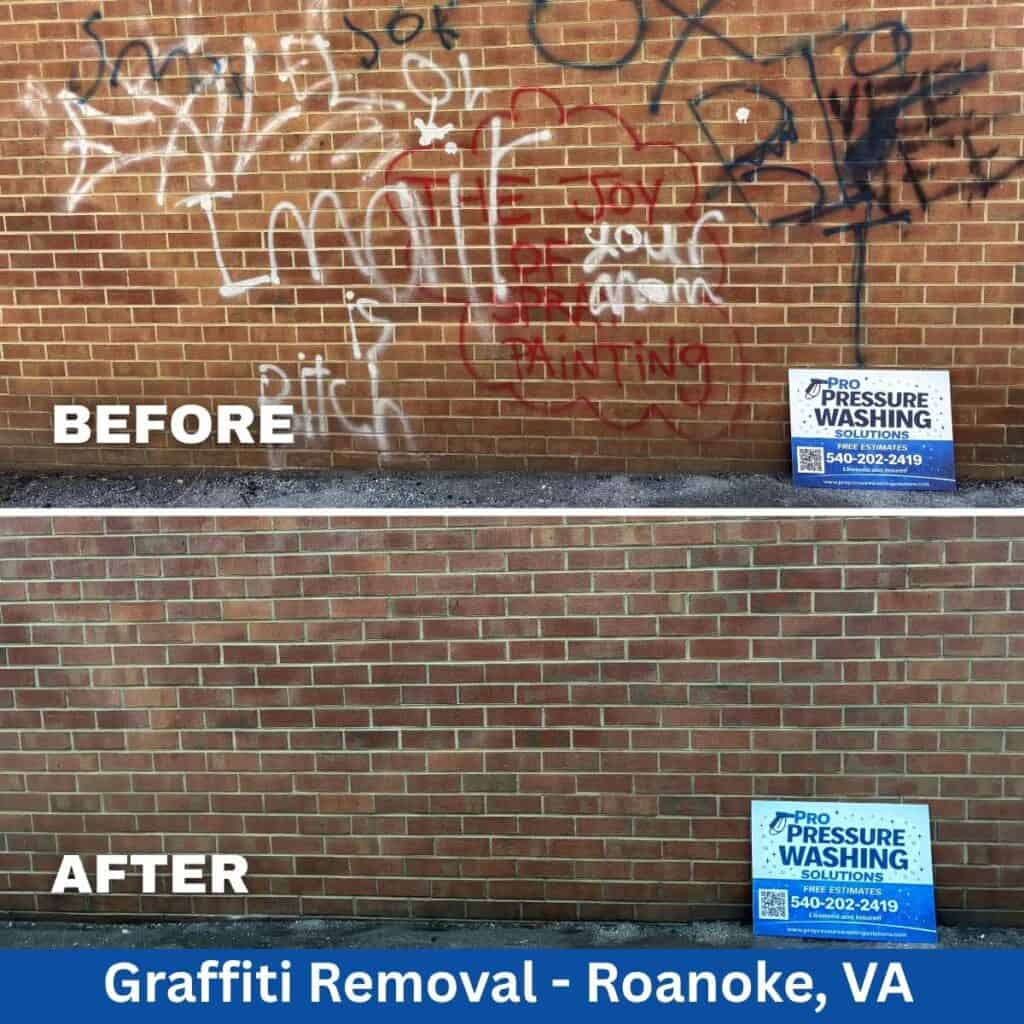
Efflorescence, hard-water stains, fertilizer stains, artillery fungus, paint, and other contamination can each require specialized treatment.
A standard house wash may therefore not include every possible stain on the property.
Specialty stain removal can require additional chemicals, equipment, PPE, dwell time, testing, and labor.
That’s why homeowners should tell the contractor if there is a particular stain they expect removed instead of assuming every mark will disappear during a standard cleaning.
Why Does Roof Cleaning Usually Cost More?
Roof cleaning is often priced differently from other exterior cleaning services because the job involves more than simply cleaning a larger surface.
A roof requires the contractor to consider the roofing material, pitch, height, access, surrounding landscaping, runoff, safety, and the type and severity of organic growth.
The cleaning process is different too. Asphalt shingles, for example, should not be cleaned the same way you would clean a concrete driveway. Professional roof cleaning typically relies on an appropriate chemical treatment rather than high pressure to remove or kill algae and other organic growth without damaging the roofing material.
Property protection can also require additional time. Plants and landscaping around the home may need to be watered, covered, monitored, or rinsed throughout the cleaning process. Gutters, downspouts, runoff areas, painted surfaces, and other materials may also need consideration.
Access and safety can significantly affect the price. A low-pitch, one-story roof with easy access is a very different project from a steep two-story roof with multiple sections, dormers, limited access, or significant fall hazards.
Heavy black streaks and widespread organic growth can also require more chemical, application time, and follow-up than light staining.
So when roof cleaning costs more than washing siding or concrete, you’re not simply paying for square footage. You’re paying for the cleaning method, safety requirements, property protection, access, treatment, and risk involved in working on one of the most important—and expensive—components of your home.
Why Can Two Pressure Washing Estimates Be Hundreds of Dollars Apart?
Suppose three companies quote the same job:
Company A: $300
Company B: $500
Company C: $800
Which one is correct?
Possibly all three.
Possibly none of them.
Price alone doesn’t tell you enough.
One contractor might include only the siding.
Another may include soffits, trim, gutters, foundation, and porch areas.
One may be insured.
Another may not be.
One may use the appropriate cleaning process, professional equipment, cleaning solutions, and property protection.
Another may simply apply pressure.
One may include specialty treatments.
Another may charge separately.
One may include a satisfaction guarantee or warranty.
Another may not.
But the scope of work isn’t the only reason prices can be hundreds of dollars apart.
How the estimate is prepared matters too.
One company may give you a quick price based on square footage or information found online without seeing the property, asking about its condition, or considering access, height, surface materials, landscaping, or specialty stains.
Another contractor may ask detailed questions, review photos or satellite imagery, identify the surfaces being cleaned, consider chemical requirements and property protection, and account for the actual scope of work before giving you a price.
Experience can also play a role. A contractor who has completed hundreds of similar jobs may recognize potential complications that someone newer to the industry hasn’t encountered yet.
Business structure matters too.
A skilled owner-operator may have relatively low overhead and be able to provide excellent service at a lower price. They may not have payroll, office staff, multiple vehicles, or many of the expenses associated with operating a larger company.
A larger exterior cleaning company may have employees, workers’ compensation insurance, commercial vehicles, office staff, scheduling software, equipment fleets, training programs, advertising expenses, and other overhead that must be reflected in its pricing.
Neither business model is automatically better.
A lower estimate could come from an experienced contractor running an efficient operation—or from someone who underestimated the job.
A higher estimate could represent a more comprehensive service—or simply a business with higher operating costs.
The number alone doesn’t tell you which is which.
The better question isn’t simply, “Who gave me the lowest price?”
It’s:
“What am I actually getting for that price?”
What Should a Pressure Washing Company Ask Before Giving You an Estimate?
A good estimate isn’t only about the customer asking questions.
The contractor should be asking questions too.
They should want to understand what surfaces you want cleaned, when the property was last cleaned, what materials they’re dealing with, whether there are specialty stains, the number of stories, availability of water, well or city, accessibility, landscaping, existing damage, and the result you’re expecting.
If there’s oxidation, loose paint, damaged siding, deteriorating mortar, rotten wood, leaking windows, or another pre-existing condition, that can affect the appropriate process.
And if a particular stain isn’t realistically removable with standard cleaning, a professional should explain that before the work begins.
One of the most important questions a contractor can ask is:
“What result are you expecting?”
Because successful service starts with both sides understanding the goal.
What Should Homeowners Ask Before Hiring a Pressure Washing Company?
This is where price should become only one part of the decision.
Ask whether the contractor carries appropriate liability insurance. Ask what cleaning method they’ll use on your particular surface. Ask what chemicals are involved and how they’ll protect landscaping. Clarify exactly what’s included in the estimate. Ask whether specialty stains are included. Ask what happens if something is damaged. Ask whether the company offers any guarantee and what that guarantee actually covers.
Virginia also has workers’ compensation requirements that apply to many employers. As a general rule, businesses that regularly employ more than two employees must carry Virginia workers’ compensation coverage, and contractor/subcontractor relationships can affect how workers are counted. Businesses below that threshold may obtain coverage voluntarily.
A homeowner doesn’t need to become an insurance expert.
But they should understand that legitimate businesses have expenses associated with operating responsibly, and those costs ultimately have to be reflected in pricing.
What Are You Actually Paying a Professional Exterior Cleaning Company For?
You’re not simply paying someone for water and bleach.
You’re paying for the knowledge to identify the surface and contamination, select appropriate chemistry, choose the correct cleaning process, operate commercial equipment, protect surrounding property, manage hoses and runoff, complete the labor, maintain equipment, handle business insurance, travel to the property, communicate with customers, prepare estimates and invoices, and stand behind the work afterward.
There are pressure washers, pumps, hoses, reels, fittings, tanks, surface cleaners, ladders, vehicles, trailers, safety equipment, replacement parts, fuel, chemicals, insurance, software, payment processing, taxes, bookkeeping, training, and maintenance.
There is also marketing.
A business has to find customers before it can serve them.
Websites, advertising, signs, referral programs, networking, and lead-generation platforms all cost money.
And, yes, a legitimate business needs to earn a profit.
Profit isn’t a dirty word.
A contractor who consistently charges too little to maintain equipment, keep insurance, replace failed pumps, pay workers, or return when a customer has a problem may not remain in business very long.
Homeowners aren’t just buying a few hours of labor.
They’re hiring an operating business.
Why Pressure Washing Prices Increase Over Time
Sometimes a homeowner remembers paying $300 for a service several years ago and wonders why the same company—or another contractor—is charging more today.
Exterior cleaning companies experience the same rising costs everyone else does.
Fuel changes.
Chemical prices change.
Insurance premiums change.
Equipment prices increase.
Replacement hoses, pumps, fittings, tires, vehicles, software, labor, advertising, and payment-processing costs don’t stay frozen forever.
A professional business has to periodically adjust pricing to remain sustainable.
That’s another advantage of routine maintenance.
Even if the contractor’s base pricing increases over time, a property that’s maintained regularly may remain easier to clean than one neglected for years.
Is DIY Pressure Washing Cheaper?
In many cases, yes.
If everything goes correctly.
A homeowner may be able to rent or buy a pressure washer and clean certain surfaces for less than hiring a professional.
There’s nothing wrong with that.
The real comparison, however, isn’t simply:
$80 equipment rental versus $400 contractor.
The homeowner should also consider chemicals, hoses, nozzles, PPE, fuel, transportation, time, equipment setup, cleanup, the learning curve, and the risk of damaging the surface.
Improper pressure or technique can damage wood, paint, siding, mortar, window seals, screens, roofing, and other materials.
DIY can make sense for someone who understands the equipment and is cleaning an appropriate surface.
Professional service becomes more valuable when the job involves elevated work, delicate materials, specialty chemistry, heavy staining, roof cleaning, difficult access, or equipment the homeowner doesn’t own.
Should You Pressure Wash Before Selling Your Home?
Exterior appearance can matter significantly when preparing a home for sale.
Potential buyers begin forming an opinion before they walk through the front door.
Dirty siding, a stained driveway, algae-covered walkways, a neglected fence, or heavy roof streaking can affect that first impression.
Cleaning doesn’t mean every seller needs every service.
The goal is to determine which areas have the biggest impact on curb appeal.
House washing, concrete cleaning, roof cleaning, deck or fence cleaning, gutters, and exterior windows can all play a role depending on the property.
If you’re preparing a listing, ask your Realtor and exterior cleaning contractor which improvements are likely to provide the most visible value.
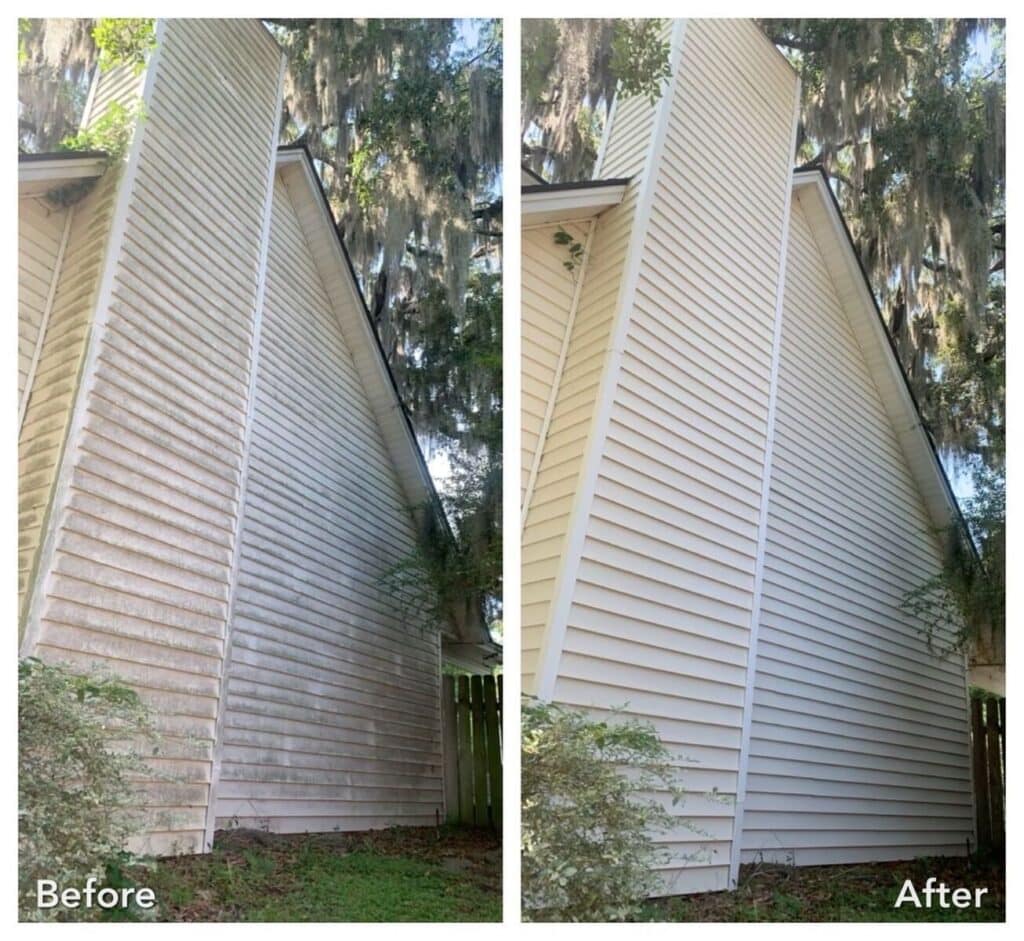
So, How Much Should Pressure Washing Cost in Roanoke?
There isn’t one price that fits every property.
Published pricing data can give homeowners a useful starting point, but the price of professional exterior cleaning ultimately depends on the actual property and the work being performed.
A 2,000-square-foot home may have substantially more than 2,000 square feet of exterior surface to clean.
A house may be one story from the front and effectively three stories from the back.
One property may sit on level, open ground while another is built into a steep Roanoke hillside.
One may have light organic growth, while another has years of accumulated algae, mildew, dirt, or specialty staining.
Access, landscaping, surface materials, water availability, cleaning method, and the amount of preparation and treatment required can all affect the final price.
That’s why the best estimate isn’t based on one national average or a square-foot number alone. It should reflect the actual scope and condition of your property.
That’s what you’re really paying for.
Why Choose Pro Pressure Washing Solutions?
Choosing an exterior cleaning company shouldn’t come down to price alone. At Pro Pressure Washing Solutions, our goal is to help homeowners understand what their property needs, what’s included in the service, and what they’re paying for before work begins.
Every property is different, which is why we take the time to evaluate the actual surface, condition, accessibility, cleaning method, and expected result instead of treating your home like a number on a real estate listing.
But for us, it goes beyond getting the property clean.
We believe in putting people over profits and treating every property with the same care and attention to detail we would want at our own homes. We’re not looking to complete one job, collect a payment, and disappear. Our goal is to earn your trust, build a relationship, and become the exterior cleaning company you can rely on for years to come.
That means showing up when we say we will, communicating clearly, protecting your property and landscaping, using the appropriate cleaning methods, and standing behind the work we perform.
When you hire Pro Pressure Washing Solutions, you get:
- Free, No-Obligation Estimates
- Licensed and Insured
- 100% Satisfaction Guarantee
- One-Year Algae-Free Guarantee
- Careful Protection of landscaping and Surrounding Property
- Clear Communication before, during, and after the job
- Attention to Detail from a Local Company focused on Long-Term Relationships
Because your home isn’t just a number on a real estate listing, and your exterior cleaning estimate shouldn’t be either.
Restore your properties curb appeal - Book your professional cleaning service today
We Show up on time, protect your landscaping, and clean your home safely and professionally. FREE ESTIMATES. Fast scheduling. Licensed and insured in Roanoke, VA.
Spots fill up quickly – lock in your spot now!
Frequently Asked Questions
1. How much does it cost to pressure wash a house in Roanoke, VA?
There isn’t one fixed Roanoke rate. National 2026 data places professional house pressure washing around $0.10 to $0.50 per square foot, but local pricing can vary significantly depending on the home’s exterior surface area, stories, condition, terrain, materials, accessibility, cleaning method, and scope of work.
2. Is the square footage listed online the same amount a pressure washing company cleans?
No. Listed square footage generally represents finished living area. Exterior cleaning may also involve garage walls, gables, exposed basement areas, architectural features, additions, and other surfaces that aren’t represented by that living-area number.
2. Why can a two-story house cost more than a one-story house of the same size?
Two homes with identical living square footage can have different exterior surface areas, heights, footprints, and accessibility. A two-story property may also require more effort to reach upper sections and can become effectively three stories tall on the downhill side of a walk-out basement.
3. Does a dirtier house cost more to clean?
It can. Heavy organic growth may require more cleaning solution, longer dwell times, repeated applications, additional rinsing, and more labor than routine maintenance cleaning.
4. Why do pressure washing companies have minimum charges?
The contractor still has travel, fuel, setup, equipment, insurance, chemical preparation, cleanup, administrative work, and other operating costs even when the actual surface being cleaned is small.
5. Can bundling pressure washing services save money?
Sometimes. Completing several services during one visit can eliminate repeated travel, setup, and teardown. Homeowners should ask whether the contractor offers package pricing for multiple services.
5. Is roof cleaning usually more expensive than house washing?
It can be because roof size, pitch, height, material, stronger treatment requirements, landscaping protection, accessibility, and increased safety considerations can all affect the project.
6. Is every stain included in a normal pressure washing service?
Not necessarily. Rust, red clay, oxidation, oil, grease, efflorescence, hard-water staining, and other specialty contamination may require different chemistry and additional treatment.
7. How often should I have my house washed?
There is no universal schedule. Shade, moisture, trees, pollen, orientation, drainage, and previous organic growth all influence how quickly a property becomes dirty. An annual inspection with cleaning as needed can be a practical maintenance approach.
8. Should I choose the cheapest pressure washing estimate?
Price matters, but it shouldn’t be the only factor. Compare what is included, cleaning methods, insurance, property protection, experience, specialty treatments, guarantees, communication, and expected results before choosing a contractor.
Looking for More Exterior Cleaning Services?
We provide residential and commercial exterior cleaning services throughout the Roanoke Valley, including Cave Spring, Salem, Vinton, Hollins, and other nearby communities. Explore our local service area page to learn more about the services we offer in your neighborhood.