If you’ve ever searched for pressure washing in Roanoke, Virginia, you may have also heard the term “soft washing.” But what exactly is soft washing, and how is it different from pressure washing?
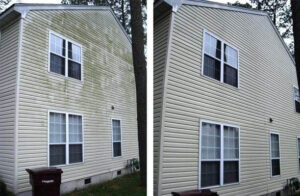
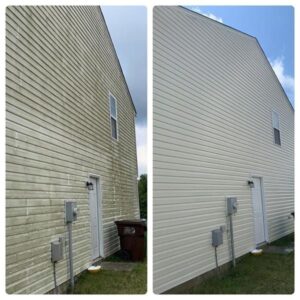
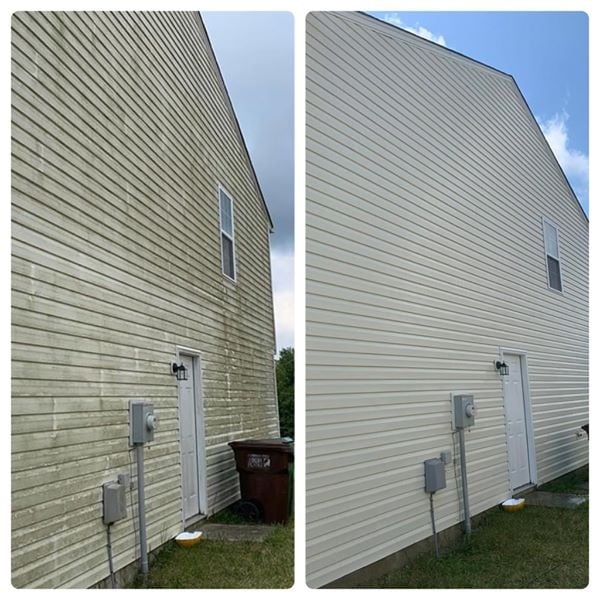
Soft washing is an exterior cleaning method that uses low water pressure combined with professional cleaning solutions to remove and treat mold, mildew, algae, dirt, and other organic growth.
Instead of relying on high pressure to blast contaminants away, soft washing allows the cleaning solution to do most of the work.
This makes it useful for many surfaces and areas where excessive pressure could cause damage, including vinyl siding, painted surfaces, roofs, decks, fences, stucco, EIFS, screens, soffits, gutters, and exterior trim.
At Pro Pressure Washing Solutions, we don’t believe every surface should be cleaned the same way. The proper method depends on the material, its condition, and what we’re trying to remove.
What Is Soft Washing?
Soft washing combines low-pressure water with specialized cleaning solutions designed to treat the source of organic growth.
Think about the green algae or black buildup you sometimes see growing on the side of a house. Simply blasting it away with high-pressure water may make the surface look cleaner, but excessive pressure can also damage the material or force water into places it doesn’t belong.
Soft washing takes a different approach.
A cleaning solution is applied to the surface and given time to work on contaminants such as:
- Algae
- Mold
- Organic growth
- Dirt and grime
- Certain environmental stains
The surface can then be gently rinsed using considerably less pressure than would be used for cleaning a durable surface such as concrete.
The goal isn’t to overpower the surface. It’s to use the right combination of chemistry, water flow, dwell time, and pressure to safely get it clean.
Soft Washing vs. Pressure Washing: What's the Difference?
The biggest difference is how the cleaning is accomplished.
Pressure washing relies more heavily on the physical force of pressurized water. This can be extremely effective on hard, durable surfaces such as concrete.
Soft washing relies more heavily on cleaning solutions and dwell time, allowing contaminants to be treated without depending on high pressure.
Neither method is automatically better.
They are simply different tools for different jobs.
For example, the pressure appropriate for cleaning a concrete driveway could damage vinyl siding, scar a wooden deck, blow out a window screen, or damage asphalt shingles.
That’s why a professional exterior cleaner should determine the appropriate method based on the surface—not simply turn up the pressure until something comes clean.
Pressure Washing vs. Power Washing: Are They the Same Thing?
Here’s a fun fact many homeowners don’t know:
Pressure washing and power washing technically aren’t the same thing.
Both use pressurized water, but power washing traditionally refers to pressure washing using heated water.
Hot water can be particularly useful for grease, oil, and certain commercial cleaning applications.
However, homeowners commonly use “pressure washing” and “power washing” interchangeably.
Why Do We Still Call It Pressure Washing?
Because that’s the term most customers recognize.
When someone wants their house, driveway, deck, fence, patio, or commercial property cleaned, they’ll often search for a “pressure washing company”—even when the safest cleaning method for part of the property is actually soft washing.
Professional pressure washing doesn’t mean using high pressure on everything.
A professional exterior cleaner should know when pressure is appropriate, when it needs to be reduced, and when cleaning solutions should do most of the work.
What Surfaces Can Be Soft Washed?
Soft washing can be appropriate for many exterior surfaces, particularly materials that can be damaged by excessive pressure.
Depending on the material and its condition, these can include:
- Vinyl siding
- Painted siding
- Brick
- Stucco
- EIFS or synthetic stucco
- Asphalt shingle roofs
- Certain metal roofs
- Wood and composite decks
- Wood and vinyl fencing
- Screened-in porches and enclosures
- Window screens
- Soffits and fascia
- Gutters
- Exterior trim
- Garage doors
- Exterior doors
- Certain outdoor furniture and fixtures
- Some patios and other delicate exterior surfaces
That doesn’t mean every surface on this list receives the exact same chemical mixture or cleaning procedure.
A wooden deck requires a different approach than vinyl siding. Asphalt shingles aren’t cleaned like a fence. Painted surfaces may require different precautions than bare masonry.
Surface identification comes first.
Why Does Lower Pressure Matter?
One of the biggest misconceptions about professional pressure washing is that more pressure means better cleaning.
It doesn’t.
Using excessive pressure on the wrong material can cause permanent damage.
Vinyl Siding
Too much pressure can damage siding or force water behind it and into openings around the home.
Soft washing allows organic growth to be treated without depending on excessive pressure.
Screens and Screened-In Porches
This is an area homeowners don’t always think about.
High pressure can stretch, tear, loosen, or completely blow out screens.
Using controlled, lower pressure around screened porches and window screens helps clean these areas without unnecessarily risking damage.
Wood Decks and Fences
Wood is another surface where more pressure isn’t necessarily better.
Excessive pressure can:
- Scar the wood
- Raise the grain
- Damage wood fibers
- Leave visible wand marks
- Create an uneven appearance
Proper wood cleaning relies on appropriate cleaning products and controlled pressure rather than trying to blast discoloration out of the wood.
For restoration projects, additional steps such as brightening or neutralizing may also be appropriate depending on the cleaning process and the condition of the wood.
Roofs
Asphalt shingles are another excellent example.
A roof shouldn’t be treated like a concrete driveway.
Aggressive pressure can damage roofing materials, which is why professional roof cleaning relies primarily on an appropriate cleaning treatment rather than high-pressure washing.
Does Soft Washing Actually Kill Algae, Mold, and Mildew?
This is one of the major advantages of soft washing.
Instead of simply trying to physically remove visible organic growth with water pressure, the cleaning solution treats the biological contamination itself.
This is particularly important with the green and black organic buildup commonly found on siding, roofs, fences, and other exterior surfaces.
The cleaning solution is given time to work before the surface is rinsed.
That’s why dwell time matters.
Professional cleaning isn’t necessarily about how quickly you can spray something off. Sometimes giving the proper cleaning solution time to work produces a better result with considerably less pressure.
Does Soft Washing Use Bleach?
This is one of the most common questions homeowners have.
Professional soft washing commonly uses sodium hypochlorite, the active ingredient also found in household bleach and swimming-pool chlorination products.
However, professional exterior cleaning isn’t simply a matter of pouring household bleach on your house.
The concentration and cleaning process should be selected according to the surface being cleaned and the type and severity of contamination present.
Different surfaces can require different concentrations and cleaning methods.
The purpose of the cleaning solution is to treat organic contamination so it can be removed without relying on potentially damaging levels of pressure.
Is Soft Washing Safe for Plants and Landscaping?
Protecting the surrounding property is an important part of professional soft washing.
Depending on the job and surrounding landscaping, precautions can include:
- Pre-wetting vegetation
- Controlling where cleaning solution is applied
- Rinsing plants and landscaping
- Managing runoff
- Avoiding unnecessary chemical exposure
- Performing a final rinse of affected vegetation
No exterior cleaning contractor should treat landscaping as an afterthought.
At Pro Pressure Washing Solutions, protecting the rest of your property is part of the cleaning process.
Does Soft Washing Remove Every Stain?
No.
And homeowners should be cautious of anyone who promises that one cleaning process will remove every type of stain from every surface.
Soft washing is particularly effective against organic contamination such as algae, mold, and mildew.
But not every stain is organic.
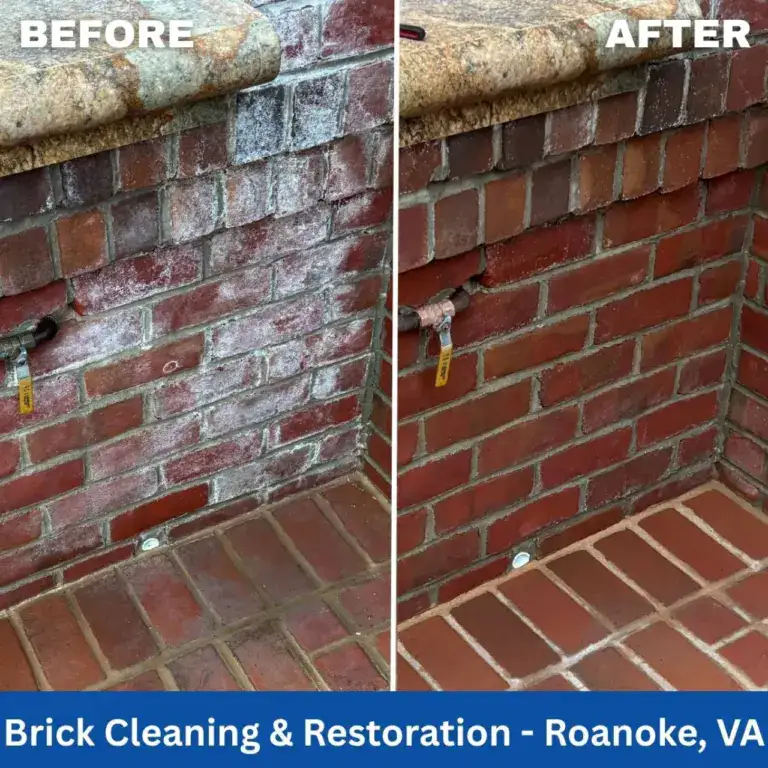
Other types of discoloration can include:
- Rust
- Red clay
- Oxidation
- Mineral deposits
- Efflorescence
- Artillery fungus
- Oil and grease
- Paint failure
- Permanent material discoloration
Some of these require specialized cleaning products or completely different treatment methods.
Others may not be completely removable.
A surface can actually be clean and still have discoloration caused by oxidation, fading, previous repairs, material deterioration, or staining that has penetrated the surface.
That’s why correctly identifying the stain is just as important as identifying the surface.
How Long Does Soft Washing Last?
There isn’t one answer that applies to every property.
How quickly organic growth returns can depend on factors including:
- Shade and sunlight
- Tree coverage
- Moisture
- Drainage
- Which direction a surface faces
- Surrounding vegetation
- Local weather conditions
A damp, shaded side of a house surrounded by trees may develop organic growth considerably faster than a dry surface receiving direct sunlight.
Here in the Roanoke Valley, our humidity, rainfall, vegetation, and seasonal conditions can create favorable environments for algae, mold, and mildew on exterior surfaces.
Is Soft Washing Better Than Pressure Washing?
Not necessarily.
They’re different tools for different jobs.
If we’re cleaning durable concrete, controlled pressure can be extremely effective.
If we’re cleaning vinyl siding, screens, wood, or asphalt shingles, using that same amount of pressure could cause damage.
Some properties require both methods during the same job.
For example, a homeowner may need soft washing for the house itself while controlled pressure is used on the driveway and sidewalks.
A professional exterior cleaning company should understand the surface, the contaminant, and the appropriate cleaning method for both.
Sometimes that’s pressure.
Sometimes it’s soft washing.
Sometimes it’s a specialized stain treatment.
And sometimes it’s a combination of all three.
FAQs
1) Is soft washing safe for vinyl siding?
When performed correctly, soft washing is an effective method for cleaning vinyl siding because it allows organic growth to be treated without relying on excessive pressure.
2) Will soft washing damage window screens?
The purpose of using lower pressure around delicate materials such as screens is to reduce the risk of damage. High-pressure water can stretch, tear, loosen, or blow out screens, which is why these areas require additional care.
3) Is soft washing safe for wood decks?
Wood can be cleaned using low-pressure methods and appropriate cleaning products, but the process should be adjusted for the type and condition of the wood. Excessive pressure can damage wood fibers and leave permanent marks.
4) Does soft washing use bleach?
Professional soft-washing solutions commonly contain sodium hypochlorite. The concentration and application method should be selected according to the surface and contamination being treated.
5) Does soft washing kill algae?
Soft washing is designed to treat organic contamination such as algae rather than relying solely on water pressure to physically remove what you can see.
6) Can soft washing remove rust?
Not through standard soft-washing chemistry. Rust is a different type of stain and generally requires a specialized treatment. Results depend on the surface and severity of the staining.
7) Can I soft wash my own house?
Exterior cleaning involves more than applying a chemical. Proper dilution, surface identification, application, rinsing, property protection, and safely working around heights are all important considerations.
Restore your properties curb appeal - Book your professional cleaning service today
We Show up on time, protect your landscaping, and clean your home safely and professionally. FREE ESTIMATES. Fast scheduling. Licensed and insured in Roanoke, VA.
Spots fill up quickly in peak season – lock in your spot now!