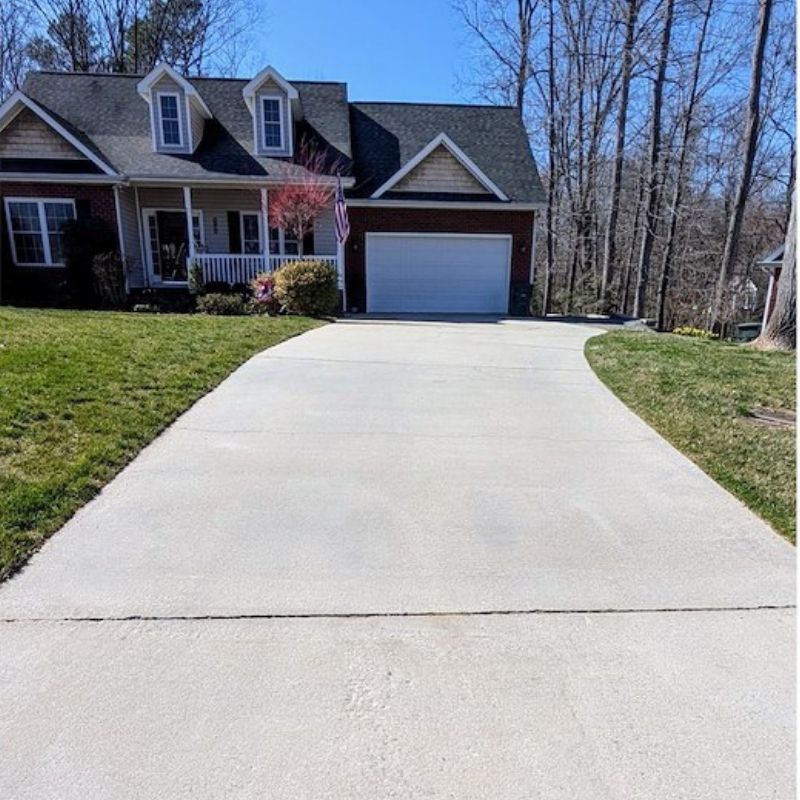
Your driveway is one of the first things people notice when they pull up to your home. Unfortunately, it is also one of the easiest surfaces to overlook. Over time, driveways throughout Roanoke, Salem, Cave Spring, Vinton, Bonsack, and the surrounding areas accumulate dirt, algae, mold, oil stains, rust stains, tire marks, and red clay deposits that can make an otherwise beautiful property look neglected.
At Pro Pressure Washing Solutions, one of the most common questions we hear is, “Can you make my driveway look new again?” The answer depends on the type of staining, the condition of the concrete, and how long the contamination has been present. Understanding the difference can help homeowners set realistic expectations and get the best possible results from professional driveway cleaning.
Why Driveways Get So Dirty in Roanoke, Virginia
Southwest Virginia’s climate creates ideal conditions for organic growth on exterior surfaces. Between our humid summers, frequent rain, shaded properties, and changing seasons, concrete driveways can quickly develop a layer of grime and biological growth.
Many homeowners assume the dark discoloration they see is simply dirt. In reality, much of what appears to be dirt is often algae, mold, mildew, or other organic growth feeding on moisture trapped within the concrete’s porous surface.
In Roanoke, we also commonly encounter:
- Black algae buildup
- Red clay staining
- Oil and grease contamination
- Rust stains
- Tire marks
- Leaf and tannin stains
- Fertilizer discoloration
Each of these contaminants requires a different cleaning approach.
Not All Driveway Stains Are Created Equal
One of the biggest misconceptions in the pressure washing industry is that every stain can be removed with enough pressure.
That simply isn’t true.
A professional contractor understands the difference between removable contamination and permanent surface damage.
Organic Growth
Organic growth is typically the easiest type of contamination to remove.
This includes:
- Mold
- Mildew
- Algae
- Moss
When treated properly with professional cleaning solutions and surface cleaning equipment, these stains often respond extremely well and can dramatically improve the appearance of the driveway.
Oil and Grease Stains
Oil stains are among the most common issues we encounter on residential driveways.
Fresh oil spills generally clean much better than older stains. As oil sits over time, it penetrates deep into the concrete pores. Once that happens, complete removal may not be possible.
A professional cleaning can often significantly improve the appearance of oil stains, but homeowners should be cautious of contractors promising 100% removal of old oil contamination.
Rust Stains
Rust stains can be caused by:
- Fertilizer
- Irrigation systems
- Metal furniture
- Vehicle parts
- Well water
Many homeowners are surprised to learn that pressure alone typically does very little to remove rust. Specialized restoration products are often required to effectively treat these stains.
Red Clay Stains
Red clay is particularly common throughout Virginia.
Construction projects, landscaping work, and vehicle traffic can spread red clay onto driveways where it becomes embedded into the surface.
These stains often require specialty treatment beyond standard pressure washing methods and can be some of the most challenging stains to completely eliminate.
Why More Pressure Isn't Always Better
Many homeowners believe pressure washing is simply a matter of using the highest PSI possible. In reality, excessive pressure can permanently damage concrete.We’ve seen driveways where inexperienced operators left visible wand marks, etched the surface, or created uneven cleaning patterns known as “etching.” Professional driveway cleaning relies on much more than pressure alone.
Proper cleaning involves:
- Correct chemical application
- Proper dwell time
- Commercial surface cleaning equipment
- Appropriate pressure settings
- Post-treatment procedures
The goal is to clean the surface effectively without causing unnecessary damage.
How Professional Driveway Cleaning Works
Step 1: Surface Inspection
Before cleaning begins, we inspect the driveway for:
- Cracks
- Surface deterioration
- Oil contamination
- Rust staining
- Heavy organic growth
- Existing damage
This helps us determine the safest and most effective cleaning process.
Step 2: Pretreatment
Many contaminants need to be broken down before surface cleaning begins.
Pretreatment helps loosen:
- Organic growth
- Embedded dirt
- Surface contaminants
- General grime buildup
Skipping this step often leads to inferior results.
Step 3: Surface Cleaning
A commercial-grade surface cleaner is used to provide consistent cleaning across the entire driveway. Unlike a standard pressure washing wand, a surface cleaner helps:
- Prevent streaking
- Prevent wand marks
- Deliver more uniform results
- Clean more efficiently
This is one of the primary reasons professionally cleaned driveways often look dramatically better than DIY attempts.
Step 4: Post-Treatment
Post-treatment is an important step that many homeowners never see.
A properly applied post-treatment can help eliminate remaining organic growth and improve the overall appearance of the surface.
In many cases, this final treatment is what creates the bright, uniform finish homeowners expect from a professional cleaning service.
Step 5: Final Inspection
Once cleaning is complete, the entire area is inspected to ensure the best possible results have been achieved and that surrounding surfaces remain protected.
Can Every Driveway Be Restored to Like-New Condition?
Honesty is important when discussing driveway cleaning. While many driveways can be dramatically improved, some conditions are permanent.
Examples include:
- Severe oil penetration
- Battery acid damage
- Surface spalling
- Deep rust contamination
- Concrete deterioration
- Bad poured concrete
A professional contractor should explain these limitations before work begins rather than making unrealistic promises. In our experience, homeowners appreciate straightforward expectations and transparent communication.
How Often Should a Driveway Be Professionally Cleaned?
Most homeowners in the Roanoke area benefit from professional driveway cleaning every one to two years.
However, certain conditions may require more frequent maintenance.
Properties with heavy shade, excessive moisture, large trees, or significant organic growth may benefit from annual cleaning to maintain appearance and prevent long-term staining.
Regular maintenance not only improves curb appeal but can also help extend the life of the concrete surface.
Professional Driveway Cleaning in Roanoke, VA
If your driveway is covered in algae, oil stains, dirt, rust stains, or years of built-up grime, professional cleaning can dramatically improve the appearance of your property.
At Pro Pressure Washing Solutions, we provide professional driveway cleaning services throughout Roanoke, Salem, Cave Spring, Vinton, Bonsack, Troutville, and surrounding communities.
Whether you’re preparing to sell your home, improving curb appeal, or simply maintaining your property, our goal is to deliver safe, effective cleaning and honest recommendations every step of the way.
Contact Pro Pressure Washing Solutions today to request a free estimate and find out how professional driveway cleaning can help restore the appearance of your home.
Looking for More Exterior Cleaning Services?
We provide residential and commercial exterior cleaning services throughout Roanoke and surrounding communities including Cave Spring, Salem, Vinton, and Bonsack, and other nearby areas.
Restore your properties curb appeal - Book your professional cleaning service today
We Show up on time, protect your landscaping, and clean your home safely and professionally. FREE ESTIMATES. Fast scheduling. Licensed and insured in Roanoke, VA.
Spots fill up quickly in peak season – lock in your spot now!